
How we fund education says a great deal about the kind of society we want to build. Yet, across the UK, universities are facing mounting financial pressures, with thousands of jobs at risk, courses closing and students experiencing the consequences of an increasingly unsustainable funding model.
As Co-Chair of Lewes District Green Party, I contributed to the party's response to the University and College Union's national day of action on 20 November 2026, supporting university staff and students protesting against cuts and calling for a public inquiry into higher education funding.
My contribution focused on the wider economic and political choices behind the crisis, drawing on my own experience of returning to postgraduate study after a ten-year gap.
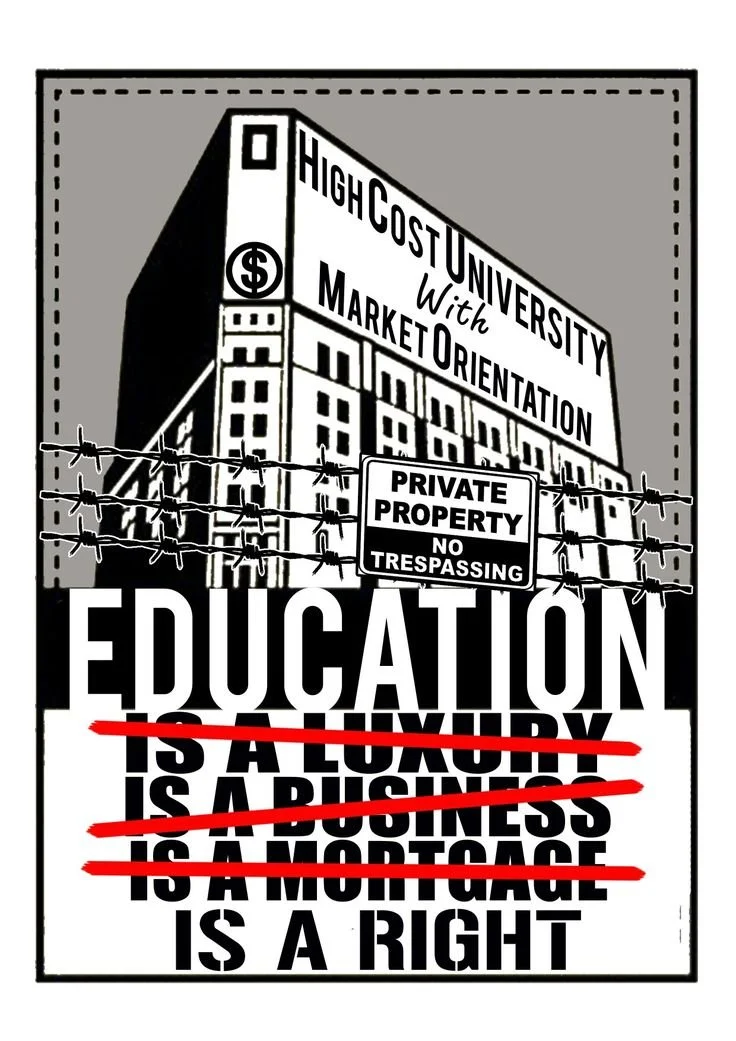
Education should not be built on a system of debt
Having completed my Master's degree this year, I wanted to highlight the increasingly prohibitive cost of accessing higher education in England.
Anyone wanting to undertake postgraduate study faces significant financial barriers. Even at undergraduate level, the student finance system places a substantial burden on individuals, with tuition fees and living costs increasingly financed through borrowing.
In my statement, I highlighted the scale of this burden, including the potential long-term repayments facing graduates:
“I completed my Master’s degree this year. Anyone in England wanting to do the same can now borrow up to £13,206 towards tuition fees and living costs, then repay 6% of their earnings above £21,000 for up to 30 years. Based on an average UK full-time salary, that could mean repaying around £35,800 over the period.”
But the problem is not simply the cost of education. It is the economic system and political choices that have made access to essential public institutions increasingly dependent on individual debt.

The political choice to impoverish public institutions
I wanted to challenge the assumption that the financial crisis facing universities is inevitable, or simply the result of insufficient public money.
For decades, successive governments have pursued economic policies that have weakened public institutions while failing to seriously explore the alternatives available to them. Rather than addressing the structural problems within the UK's economic system, the costs have increasingly been transferred onto individuals, households and essential public services.
In my statement, I argued:
“It does not have to be this way. This is the consequence of decades of needless, cruel austerity and successive governments’ failure to reform an economic system that embeds debt throughout society. This failure imposes enormous, avoidable costs on society, including on everyone seeking access to higher education.”
This is ultimately a question of political priorities. The capacity to fund education, healthcare and other essential institutions is shaped not only by how much money is available, but by how our economy is organised, how wealth is distributed, how money is created and how public institutions are financed.
We need to move beyond the narrow assumption that public investment must always be constrained by the same economic framework that has contributed to the problems we are trying to solve.
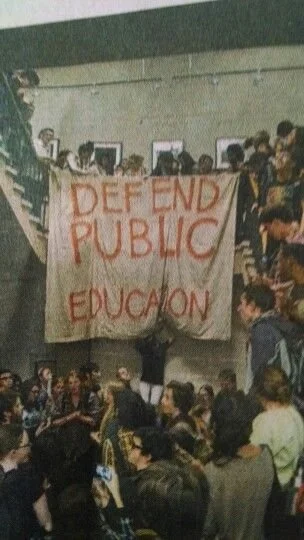
Rethinking the economics of public investment
Education is not simply an individual investment or a commodity to be purchased. It is fundamental to our collective economic and social development.
Universities contribute to scientific discovery, innovation, professional skills, cultural life and the intellectual foundations of a democratic society. Undermining them carries costs that extend far beyond university campuses.
I concluded my contribution by highlighting the need for a more ambitious approach to economic policy:
“Education is fundamental to our economic and social success. If successive governments had prioritised building a viable, equitable and sustainable economy, we would have far greater capacity to fund the essential institutions and services on which our society depends.”
For me, this is the bigger conversation we need to have. Rather than accepting the managed decline of public institutions, we should be exploring the economic alternatives that could enable them to thrive.
A fairer and more sustainable economy requires us to rethink not only what we fund, but how we create the economic conditions to fund it.